Link building helps your website get more visitors from search engines like Google. But not all ways to get links are safe. Some can hurt your site and cause penalties from Google. That’s why white hat link building is the smart choice. It follows Google’s rules, builds real trust, and gives long-term results.
In this complete guide, we explain everything in simple English. You will learn what white hat link building is, why it matters, the best strategies and techniques, how to choose services or agencies, and affordable options. This guide follows Google’s E-E-A-T rules: Experience (real SEO knowledge), Expertise (proven methods), Authoritativeness (based on trusted sources), and Trustworthiness (no tricks or false promises).
What Is White Hat Link Building?
White hat link building means getting backlinks (links from other websites to yours) in an honest and natural way. These links come because people find your content useful, not because you pay for them in a sneaky way or use tricks.
Google likes white hat links because they look real. They come from good websites that share your content because it helps their readers. This builds your site’s authority over time.
White hat link building follows Google’s guidelines. It avoids spam, like buying thousands of low-quality links or using automated tools. The goal is quality over quantity.
White hat vs black hat: Black hat uses shortcuts like private blog networks or link farms. These can give quick wins but often lead to penalties. White hat takes more time but keeps your site safe and helps it grow steadily.
Many experts say white hat is the only safe way in 2025 and 2026. Google updates its rules often to fight spam, so ethical methods win.
Why Choose White Hat Link Building?
Here are the main benefits:
- No risk of Google penalties that can drop your rankings or remove your site from search.
- Builds real trust with search engines and users.
- Brings steady, long-term traffic growth.
- Improves your site’s domain authority (a score that shows how strong your site is).
- Works well with other SEO parts like good content and fast site speed.
- Helps in AI search results and featured snippets, as Google favors helpful, trusted sites.
If you use black hat methods, one update can ruin months of work. White hat protects your business.
White Hat Link Building Strategies and Techniques
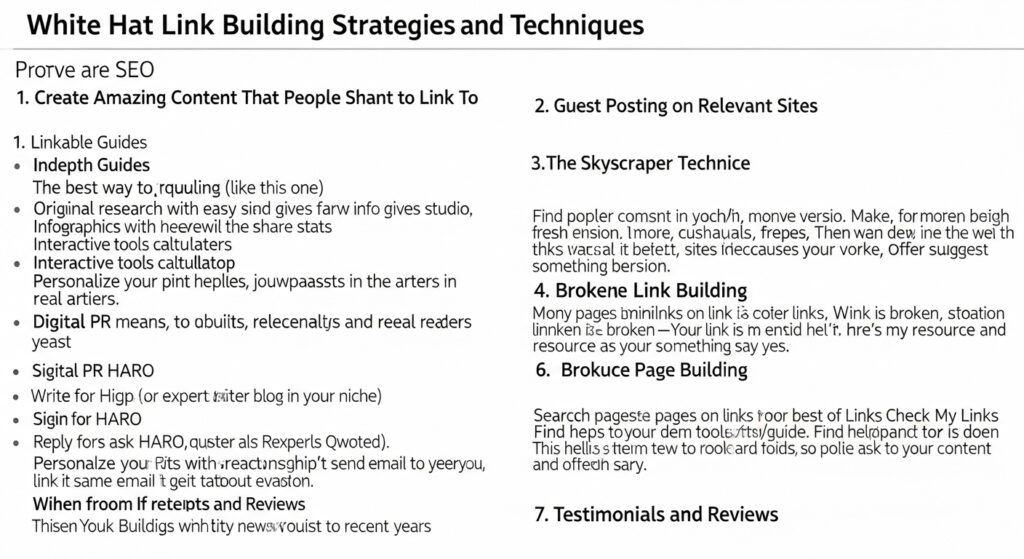
Here are proven white hat strategies that work well today. These come from top SEO experts and real results in recent years.
1. Create Amazing Content That People Want to Link To The best way to get links is to make content so good that others share it naturally. This is called “linkable assets.” Examples include:
- In-depth guides (like this one!)
- Original research or data studies
- Infographics with easy-to-share stats
- Interactive tools or calculators
- Ultimate lists or resource roundups
When your content solves problems or gives new info, bloggers, journalists, and site owners link to it.
2. Guest Posting on Relevant Sites Write a high-quality article for another blog in your niche. Include a link back to your site in the bio or content (if it fits naturally). Choose sites with good authority and real readers. Personalize your pitch—don’t send the same email to everyone.
This builds relationships and gets targeted traffic.
3. Digital PR and HARO (Help a Reporter Out) Sign up for HARO (or similar sites like Qwoted). Reporters ask for expert quotes. Reply with helpful answers, and they may link to your site in their articles. This gets links from news sites and big publications.
Digital PR means reaching out to journalists with newsworthy stories about your brand.
4. The Skyscraper Technique Find popular content in your niche with many links. Make a better, updated version (longer, more visuals, fresh data). Then email sites that linked to the old one and suggest your improved version.
This works because you offer something better.
5. Broken Link Building Search for broken links on other sites (use tools like Ahrefs or Check My Links). Find pages where the link is dead, create similar or better content, and email the site owner: “Your link is broken—here’s my resource as a replacement.”
This helps them fix their site, so they often say yes.
6. Resource Page Outreach Many sites have “resource” or “best of” pages with links to helpful tools/guides. Find these in your niche and politely ask to add your content if it fits.
7. Testimonials and Reviews If you use a product or service, write a nice testimonial. Many companies put these on their site with a link back to you.
8. Original Data and Studies Collect your own data (surveys, stats from your industry). Publish it. Others link because it’s fresh info.
9. Influencer and Community Outreach Join forums, Reddit, or LinkedIn groups. Share value first, then suggest your content when it helps.
10. Fix Unlinked Mentions Use tools to find where people mention your brand but don’t link. Email them kindly: “Thanks for the mention! A link would be great if you think it adds value.”
These techniques focus on value, relevance, and relationships. Do them consistently for the best results.
White Hat Link Building Services and Agencies
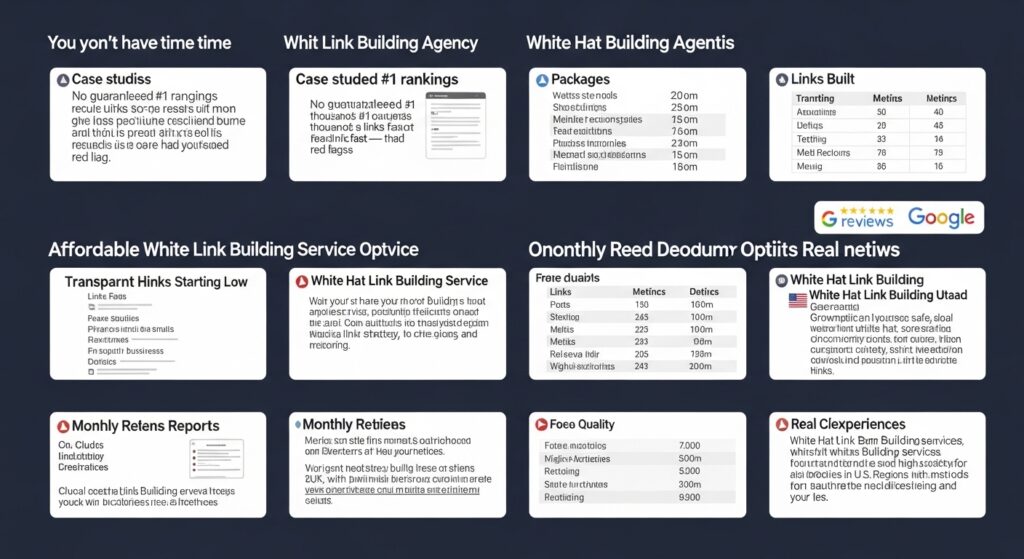
If you don’t have time to do link building yourself, hire experts. A good white hat link building agency or white hat link building company uses only ethical methods.
Look for:
- Agencies that show case studies and real results.
- No promises of “guaranteed #1 rankings” or thousands of links fast—that’s a red flag.
- Transparent reports on links built, sites, and metrics.
- Focus on quality (high-authority, relevant sites).
Affordable White Hat Link Building Service options exist. Some agencies offer packages starting low for small businesses. Others have monthly retainers for ongoing work.
Reviews matter—check white hat link building service reviews on sites like Clutch or Google. Real clients share experiences.
For local needs, like white hat link building Utah, some agencies specialize in US regions with local directories and news.
A white hat link building specialist can audit your site first, plan a custom strategy, and handle outreach.
White hat link building services agency often includes content creation, outreach, and monitoring.
One example is services like Growmatic, which focuses on safe, manual white hat methods for high-authority links.
Choose based on your budget, niche, and goals.
Affordable Agency Solutions
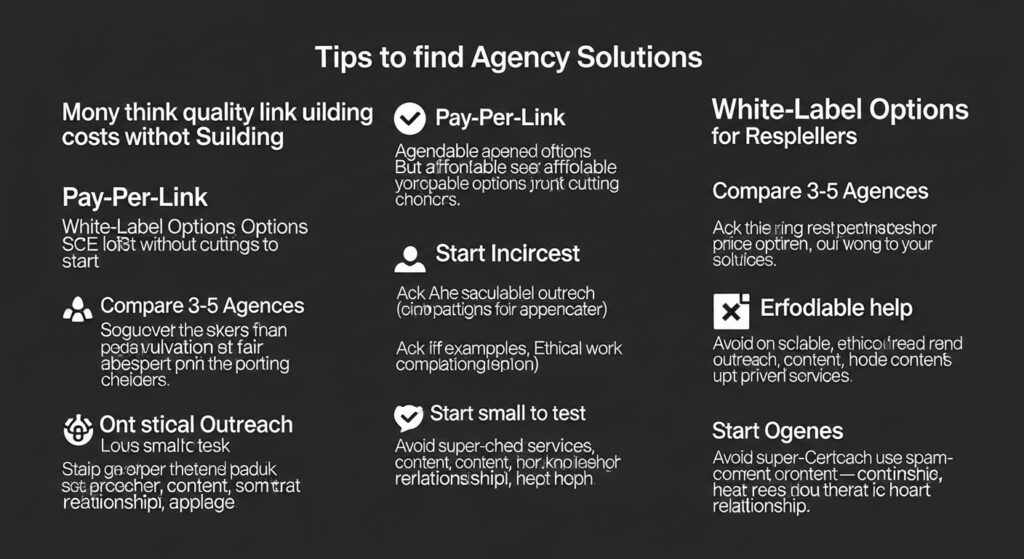
Many think quality link building costs a lot. But affordable options are available without cutting corners.
- Look for pay-per-link or small packages to start.
- Agencies with white-label options (for resellers) often have fair prices.
- Some focus on scalable, ethical outreach at lower costs.
Tips to find affordable help:
- Compare 3-5 agencies.
- Ask for examples of past work.
- Start small to test.
- Avoid super-cheap services that use spam—they hurt more than help.
Good agencies invest in real outreach, content, and relationships, so prices reflect that value.
Final Thoughts: Start Building Links the Right Way
White hat link building is about patience and value. It takes time, but the rewards are real: higher rankings, more traffic, and a strong site that lasts.
Follow this guide step by step. Create great content, use ethical outreach, and consider expert help if needed.
Stay updated—SEO changes, but white hat principles stay the same. Focus on helping people, and Google will notice.
Your site deserves safe, long-term growth. Start today with one strategy, like creating a great guide or signing up for HARO. You will see results over months.
Disclaimer:
This article is for educational purposes only. It is not promotional, sponsored, or affiliate content. The information here is meant to help you understand white hat link building. We do not guarantee any results, and we are not responsible for any actions you take based on this guide. Always use your own judgment and follow Google’s rules.